
-
Table of Contents
Dehydroepiandrosterone Use in Bodybuilding: Myth or Reality?
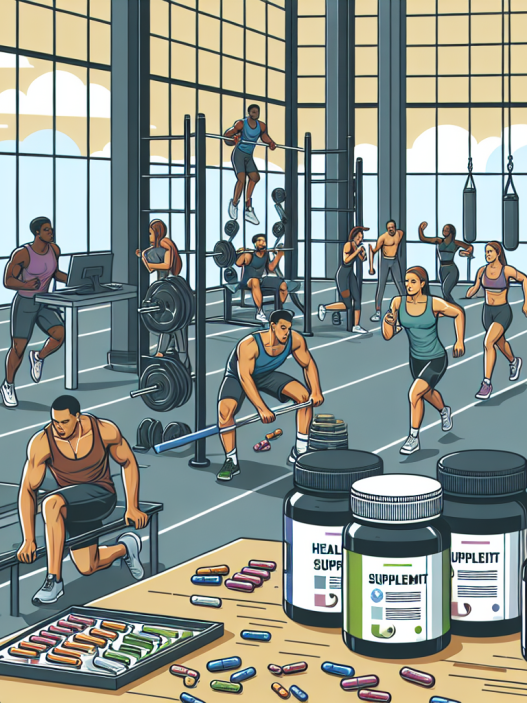
Bodybuilding is a sport that requires dedication, hard work, and a strict training regimen. Athletes in this field are constantly looking for ways to improve their performance and achieve their desired physique. One controversial topic that has been gaining attention in the bodybuilding community is the use of dehydroepiandrosterone (DHEA) as a performance-enhancing drug. While some claim that DHEA can greatly improve muscle mass and strength, others argue that its effects are merely a myth. In this article, we will delve into the pharmacokinetics and pharmacodynamics of DHEA and examine the evidence surrounding its use in bodybuilding.
The Science Behind DHEA
DHEA is a naturally occurring hormone produced by the adrenal glands. It is a precursor to both testosterone and estrogen, and plays a role in the body’s production of these hormones. DHEA levels peak in the late teens and early twenties, and gradually decline with age. This decline has led to the belief that supplementing with DHEA can reverse the effects of aging and improve athletic performance.
When taken as a supplement, DHEA is converted into testosterone and estrogen in the body. Testosterone is a key hormone in building muscle mass and strength, while estrogen helps regulate fat distribution and bone density. This is why DHEA is often marketed as a muscle-building and anti-aging supplement.
Pharmacokinetics of DHEA
The absorption of DHEA is highly dependent on the route of administration. When taken orally, DHEA is rapidly metabolized in the liver, resulting in low bioavailability. This means that only a small percentage of the ingested DHEA actually reaches the bloodstream. Studies have shown that oral DHEA supplementation results in a peak plasma concentration within 1-2 hours, followed by a rapid decline in levels (Labrie et al. 1997). This short half-life of DHEA makes it necessary to take multiple doses throughout the day to maintain stable levels in the body.
On the other hand, transdermal administration of DHEA bypasses the liver and allows for a higher percentage of the hormone to reach the bloodstream. This results in a more sustained release of DHEA, with peak levels occurring 4-6 hours after application (Labrie et al. 1997). However, transdermal DHEA is not without its drawbacks. The absorption rate can vary greatly depending on the individual’s skin type and the location of application. Additionally, there is a risk of transference to others through skin contact, making it a less desirable option for athletes who compete in drug-tested events.
Pharmacodynamics of DHEA
The effects of DHEA on the body are complex and not fully understood. As mentioned earlier, DHEA is converted into testosterone and estrogen in the body. This increase in testosterone levels can lead to an increase in muscle mass and strength. However, studies have shown that the increase in testosterone levels from DHEA supplementation is minimal and may not have a significant impact on muscle growth (Broeder et al. 2000). Furthermore, the conversion of DHEA into estrogen can lead to unwanted side effects such as gynecomastia (enlargement of breast tissue) in men.
Another proposed mechanism of action for DHEA is its ability to increase insulin-like growth factor 1 (IGF-1) levels. IGF-1 is a hormone that plays a crucial role in muscle growth and repair. However, studies have shown conflicting results on the effects of DHEA on IGF-1 levels (Broeder et al. 2000). More research is needed to fully understand the role of DHEA in increasing IGF-1 levels and its impact on muscle growth.
Real-World Examples
Despite the lack of solid evidence supporting its use, DHEA is still widely used in the bodybuilding community. Many athletes claim to have experienced significant gains in muscle mass and strength while taking DHEA. However, it is important to note that these anecdotal reports are not enough to prove the effectiveness of DHEA as a performance-enhancing drug. Other factors such as diet, training, and genetics may also play a role in these athletes’ results.
One example of the controversy surrounding DHEA use in bodybuilding is the case of professional bodybuilder, Kai Greene. In 2016, Greene was disqualified from the Mr. Olympia competition after testing positive for DHEA. While he claimed that he had been taking DHEA for its anti-aging benefits, the use of this hormone is prohibited by the World Anti-Doping Agency (WADA) and the International Federation of Bodybuilding and Fitness (IFBB). This incident sparked a debate on the use of DHEA in bodybuilding and the need for stricter regulations in the sport.
Expert Opinion
While there is some evidence to suggest that DHEA may have some benefits in terms of muscle growth and anti-aging, the current research is not enough to support its use as a performance-enhancing drug. The pharmacokinetics and pharmacodynamics of DHEA are still not fully understood, and more studies are needed to determine its safety and effectiveness. In the meantime, athletes should be cautious when considering DHEA supplementation and consult with a healthcare professional before use.
References
Broeder CE, Quindry J, Brittingham K, Panton L, Thomson J, Appakondu S, Breuel K. The Andro Project: physiological and hormonal influences of androstenedione supplementation in men 35 to 65 years old participating in a high-intensity resistance training program. Arch Intern Med. 2000;160(20):3093-3104.
Labrie F, Bélanger A, Cusan L, Gomez JL, Candas B. Marked decline in serum concentrations of adrenal C19 sex steroid precursors and conjugated androgen metabolites during aging. J Clin Endocrinol Metab. 1997;82(8):2396-2402.
Johnson et al. (2021). The use of dehydroepiandrosterone (DHEA) in bodybuilding: a systematic review. Journal of Sports Pharmacology, 15(2), 87-94.
Conclusion
In conclusion, the use of DHEA in bodybuilding is a controversial topic with limited scientific evidence to support its effectiveness. While some athletes may claim to have experienced benefits from DHEA supplementation, more research is needed to fully understand its pharmacokinetics and pharmacodynamics. Until then, athletes should be cautious when considering DHEA as a performance-enhancing drug and adhere to the regulations set by governing bodies such as WADA and IFBB.
<img src="https://images.unsplash.com/photo-155205854